
Overview
Although using a credit card is handy, it may quickly become stressful if you miss payments or receive collection calls. Thankfully, there are policies in place from the Reserve Bank of India (RBI) to shield you against harassment by credit card companies and their representatives. Knowing your rights under these laws allows you to respond if you are being treated unfairly and helps you maintain your dignity. This post will discuss what harassment is, what the RBI guidelines state, how to defend yourself, and what to do if your rights are infringed.
What does “Credit Card Harassment” mean?
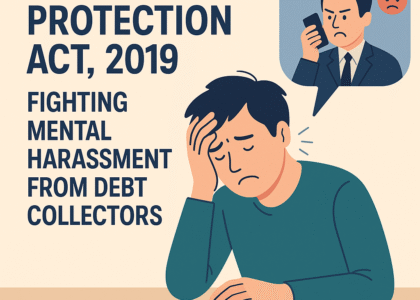
Credit-card harassment is any aggressive, abusive, or unfair activity by a card issuer, its collection agencies, or third parties in an attempt to collect debts. These are some of the examples:
- making abusive or threatening phone calls with the intent to degrade you or your family.
- Making frequent late-night or odd-hour calls.
- visits to your home or place of employment that are unauthorised or irrational.
- falsely accusing you of unlawful seizures or police action when none has taken place.
Such practices are not just bad manners – they violate the central bank’s guidelines for fair treatment of borrowers. For example, the RBI has clearly stated that card issuers and their agents “shall not resort to intimidation or harassment of any kind, either verbal or physical… making threatening and anonymous calls or making false and misleading representations.”
The RBI’s Principal Credit Card Recovery Guidelines
These are some of the RBI’s most significant regulations that shield you from credit card debt harassment.
2.1 No harassment or intimidation When attempting to collect money from you or your family or friends, banks, NBFCs, and their representatives are prohibited from using verbal or physical intimidation or harassment.
2.2 Respect for Confidentiality and Privacy Your card issuer is not allowed to violate your privacy in any way, such as by persistently contacting you at strange times or giving your number to unapproved individuals.
Without your permission, they are not allowed to tell your neighbours, friends, or family about your debt or personal information.
2.3 Contact Times and Proper Behaviour
Calls and personal visits must be made during normal hours; many sources cite 7 a.m. to 7 p.m. (some cite 8 a.m. to 7 p.m.).
Agents should identify themselves, have the proper authorisation, and should not make harassing, unannounced visits.
2.4 Disclosure & Fair Practices
To recover debt, card issuers have to follow a Fair Practices Code, and they are under an obligation to provide exact information on dues, interest, fees, and rights.
They should provide a transparent grievance redressal mechanism and indicate the name and contact details of the Grievance Officer on the bill and website.
2.5 Complaint Procedure and Remedies
In case any of these regulations are not followed by the card issuer or its agent, you can lodge a complaint with the bank or NBFC. If that does not yield a resolution, you can then escalate it with the Banking Ombudsman or directly to the RBI via their complaint portal.
Failure to comply might lead to consequences, such as regulatory action.
Your Rights as a Credit Cardholder
You have power when you are aware of your rights. These are your basic rights when it comes to credit card harassment and recovery.
3.1 Right to Freedom from Harassment and Respect
You have a right to expect fair, courteous communication and to be treated with dignity. The intimidation, abuse, or harassment of another is unacceptable behaviour.
3.2 Privacy Rights
Your credit card company has to keep you confidential, not publicly embarrass you, and not improperly involve your family or friends.
3.3 Right to Understandable Information
You have the right to know how much you borrowed, what fees apply, how interest is calculated, and your repayment options. Any hidden or misleading information is a breach of the regulations.
3.4 Right to Fair Communication and Contact Limits
You can expect that calls or visits will be within reasonable hours and with proper identification of the agent. You can refuse contact outside reasonable hours or with persons not authorised
3.5 Right to an Effective Grievance Mechanism
If you feel harassed or otherwise treated unfairly, you may submit a complaint to the bank and, if necessary, further escalate it. The bank should provide information on how to do so.
Actions to be Taken in Case of Harassment
Here is a step-by-step action plan to handle unfair or harassing rehabilitation tactics.
Step 1: Record Everything
- Keep records of:
- dates, times, and details of the telephone calls and visits
- names of bank officers and agents
- Any threats, insults, or visits out of a visiting hour upon
- If you choose to escalate the situation, these details will be useful. Legals365.com
Step 2: Inform the Bank. Email the grievance cell of the card-issuing company. Provide facts, seek resolution, and refer to the RBI recommendations. Find out the name and contact of the Grievance Officer from the bank’s website or statement.ask for resolution, reference the RBI guidelines. Check the bank’s website or your statement for the name/contact of the Grievance Officer.
Step 3: Make a formal request to cease the behaviour
You can ask the agent to cease contacting third parties, cease calling after hours, properly identify themselves, and other things. You have the right to escalate if the behaviour persists.
Step 4: Utilize the RBI Portal or the Banking Ombudsman
Use the banking ombudsman system or the RBI’s complaint portal at sachet.rbi.org.in+1 if the bank does not reply within the allotted period (often 30 to 60 days) or if the response is inadequate.
Step 5: Take Legal Action if Required
You may need to contact the police or civil courts in severe situations (physical threats, intrusion, trespass). According to the regulations, collecting must be equitable and non-coercive.
You can ask the agent to cease contacting third parties, cease calling after hours, properly identify themselves, and other things. You have the right to escalate if the behavior persists.
Step 4: Utilise the RBI Portal or the Banking Ombudsman
Use the banking ombudsman system or the RBI’s complaint portal at sachet.rbi.org.in+1 if the bank does not reply within the allotted period (often 30 to 60 days) or if the response is inadequate.
Step 5: Take Legal Action if Required
You may need to contact the police or civil courts in severe situations (physical threats, intrusion, trespass). According to the regulations, collecting must be equitable and non-coercive.
Avoidable Behaviour for Credit Card Issuers and Agents
The following is a list of actions that are prohibited by RBI regulations:
- Making abusive phone calls and making illegitimate threats of arrest or property confiscation are examples of harassment.
- Calling before 7 a.m. or after 7 p.m. or persistently pestering you are examples of excessive or odd-hour contact.
- revealing your debt to loved ones, coworkers, or neighbours, or making unexpected visits to your home or place of employment to humiliate you.
- Making misleading claims regarding the legal action that would be pursued or posing as someone else are examples of misrepresentation.
- Ignoring adequate identification: It is a warning sign when agents neglect to present identification and a letter of authorisation.
In conclusion
It’s difficult enough to deal with credit card debt without experiencing intimidation or harassment. The RBI has strong regulations that safeguard you, the borrower, and guarantee that debt recovery is done fairly, openly, and respectfully. You have unambiguous rights: to get accurate information, to be treated with dignity, to have your privacy respected, and to have access to grievance redressal procedures. You can defend your rights and put an end to unfair practices by recording events, contacting your bank, and escalating if necessary. Recall that you still have the right to be treated with respect even if you are in debt.
Take action if you believe a card issuer or its representative is harassing you. Recognise your rights. Make use of the mechanics. Preserve your dignity..
FAQ
1.Can recovery agents call me anytime for credit card dues?
No. According to RBI guidelines on credit card recovery, agents can only contact you between 7 a.m. and 7 p.m. They must identify themselves properly and should not harass you with repeated or late-night calls.
2.Can a recovery agent visit my home or workplace?
A recovery agent can visit only during reasonable hours and must carry valid identification and authorisation from the bank. Under RBI’s fair practices code, such visits must not cause embarrassment or violate your privacy.
3.Is it legal for a credit card company to share my debt details with others?
No. RBI’s privacy protection guidelines strictly prohibit banks or agents from sharing your personal or debt details with neighbours, colleagues, or family members. Doing so is a clear violation of your consumer rights.
4.How can I complain to the RBI about harassment calls?
You can visit the Sachet RBI portal (https://sachet.rbi.org.in) or use the Integrated Ombudsman Scheme to submit your complaint. Attach call records or any evidence of harassment to strengthen your case.
YOU MAY ALSO LIKE :
Credit Cards: A Smart Financial Tool or a Debt Trap? (A Real-Life Case Study)
Patents, Copyrights & Trademarks: The Real Power of Intellectual Property in India