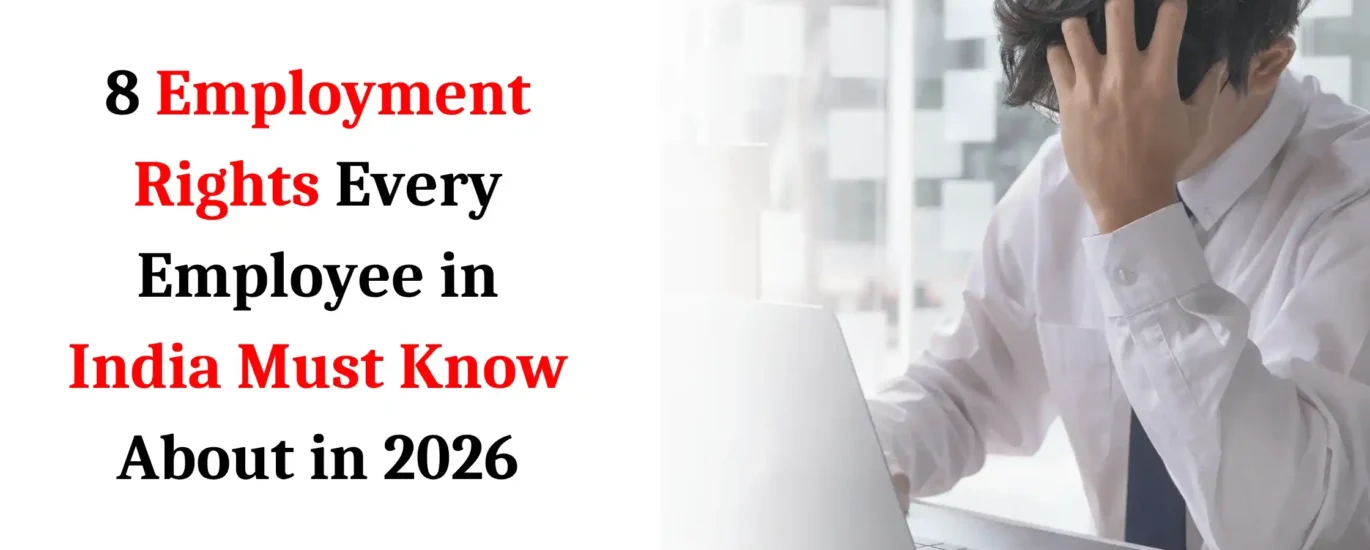
In today’s fast-paced work environment, many employees are unaware of their basic legal rights. Whether you work in a corporate office in Delhi NCR, a factory, startup, or any other sector, understanding your employment rights is essential to protect yourself from exploitation.
Indian labour laws provide several protections to employees. Unfortunately, many of these rights are violated due to lack of awareness. In this article, we discuss 8 important employment rights that every employee in India should know.
Knowing these rights can help you take timely action and seek justice when needed.
1. Right to Minimum Wages
Every employee has the right to receive minimum wages as fixed by the government under the Minimum Wages Act. This applies to both skilled and unskilled workers across different sectors.
Many employers pay less than the prescribed minimum wages, especially in small companies and the unorganised sector. As an employee, you have the right to demand the correct minimum wage applicable to your role and location.
What you can do: Check the minimum wage rates notified by your state government and compare them with your salary slip.
2. Right to Timely Payment of Wages
Under the Payment of Wages Act, your employer must pay your salary on time. Delay in salary payment beyond the permitted period is illegal.
This right also covers timely payment of overtime wages. Many employees face salary delays of 2–3 months, which is a clear violation of their rights.
What you can do: Send a written complaint to your employer and approach the labour department if the delay continues.
3. Right to a Safe and Healthy Workplace
Every employee has the right to work in a safe and healthy environment. Employers are legally bound to provide proper safety measures, especially in factories, construction sites, and industries involving hazardous work.
This includes providing safety equipment, proper ventilation, clean drinking water, and first-aid facilities.
If your workplace lacks basic safety standards, you have the right to raise the issue without fear of retaliation.
4. Right to Protection Against Sexual Harassment (POSH)
The POSH Act (Prevention of Sexual Harassment at Workplace) gives every woman employee the right to work in an environment free from sexual harassment.
Companies with more than 10 employees must constitute an Internal Complaints Committee (ICC) to handle complaints. Even smaller organisations must follow due process.
This right applies to all women employees, including interns, temporary staff, and contractual workers.
Internal link: POSH Policy & Compliance Services in Delhi
5. Right to Maternity Benefits
Under the Maternity Benefit Act, women employees are entitled to 26 weeks of paid maternity leave for the first two children. They also have the right to nursing breaks and protection from dismissal during pregnancy.
Many private companies try to avoid giving full maternity benefits. Employees should be aware that denying these benefits is illegal.
6. Right Against Wrongful Termination
An employee cannot be terminated arbitrarily or without following due process. If you are fired without proper notice, without valid reasons, or as a form of retaliation, it may amount to wrongful termination.
In such cases, you can challenge the termination before the labour court or appropriate authority and claim reinstatement or compensation.
This is one of the most common areas where employees seek legal help.
7. Right to Social Security Benefits
Employees are entitled to several social security benefits, including:
- Provident Fund (PF)
- Employee State Insurance (ESI)
- Gratuity
- Pension
Many employers deduct PF and ESI from salary but fail to deposit it with the authorities. This is a serious violation of employee rights.
You have the right to check your PF and ESI passbook regularly and raise complaints if contributions are not deposited.
8. Right to Reasonable Working Hours and Leave
Indian labour laws prescribe limits on working hours. Generally, an employee should not be made to work more than 8–9 hours a day and 48 hours a week, with proper overtime compensation.
You also have the right to:
- Weekly offs
- Casual leave
- Sick leave
- Earned/Privilege leave
- Public holidays
Forcing employees to work excessively without rest or compensation is illegal.
Internal link: Laws Around Working Hours in India
Why Most Employees Fail to Claim Their Rights
Despite having strong labour laws, many employees in Delhi NCR and across India suffer in silence because:
- They are unaware of their rights
- They fear losing their job
- They don’t know the legal procedure to file complaints
- They lack proper documentation and evidence
This is where professional legal guidance becomes very important.
How an Employment Lawyer Can Help You
If your employer is violating any of the above rights, an experienced employment lawyer can help you by:
- Sending a legal notice to your employer
- Filing complaints before the labour commissioner
- Representing you in labour court
- Helping you claim dues, compensation, or reinstatement
- Guiding you through POSH complaints and other workplace issues
At Global Vision Law Firm, our employment law team regularly assists employees facing issues related to wrongful termination, salary disputes, workplace harassment, and denial of benefits.
Internal link: Employment Law Services
Conclusion
As an employee, knowing your rights is your first line of defence against exploitation. The 8 employment rights discussed above are not just legal provisions — they are your basic protections at the workplace.
Whether you are facing salary delays, workplace harassment, unfair termination, or denial of benefits, you don’t have to suffer silently. Timely legal action can make a big difference.
If you believe your employment rights are being violated, it is advisable to consult an experienced employment lawyer at the earliest.
Need Legal Help Regarding Your Employment Rights?
Our team at Global Vision Law Firm specialises in employment and labour law matters across Delhi NCR. We provide practical and effective legal solutions for employees facing workplace issues.
Contact us today for a consultation